
By: Dauda Lawal – Web Developer
Modern applications need more than speed. They need reliable data storage, rapid recovery, and the flexibility to adapt as business requirements evolve. For years, developers have relied on in-memory caching to accelerate applications, reduce database workloads, and deliver responsive digital experiences. However, traditional caching alone may not provide the data durability required for mission-critical workloads.
Amazon Web Services (AWS) is addressing this challenge with an important update to Amazon ElastiCache for Valkey. Announced on October 27, 2026, the update allows developers to enable or disable durability on existing node-based clusters without creating a new cluster. This capability gives businesses greater flexibility to evolve their infrastructure without rebuilding their ElastiCache environments from scratch.
For organizations building AI agents, payment platforms, real-time inventory systems, and retrieval-augmented generation (RAG) applications, this development creates new opportunities to combine high-speed data access with stronger data protection.
Amazon ElastiCache for Valkey now supports changing durability on existing clusters.
What Is Amazon ElastiCache, and Why Does Data Durability Matter?
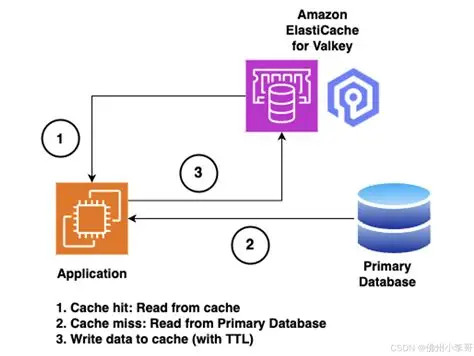
Amazon ElastiCache is a fully managed in-memory data service that helps applications retrieve frequently accessed information quickly. It supports engines such as Valkey, Redis OSS, and Memcached, enabling developers to reduce database load and improve application performance.
Businesses commonly use ElastiCache for session management, leaderboards, frequently accessed database records, real-time analytics, and application response caching. By keeping data in memory, applications can avoid repeatedly querying slower persistent storage systems.
However, traditional caching introduces an important consideration: what happens when an application needs data that cannot be easily recreated?
Consider an AI assistant that maintains a user’s conversation history, a payment platform that temporarily stores tokenization data, or an e-commerce application tracking available inventory. Losing critical application state could disrupt operations, create inconsistent experiences, or require expensive recovery procedures.
Data durability addresses this challenge by protecting stored information against certain infrastructure failures. With durability enabled, Amazon ElastiCache for Valkey uses a Multi-AZ transactional log to support data recovery and fast restarts. This allows organizations to use ElastiCache for more than disposable cache entries.
AWS Introduces Flexible Durability Configuration for Existing Clusters
Previously, developers could not change the durability configuration of an existing ElastiCache for Valkey node-based cluster in place. Organizations that wanted to change how their applications handled persistent data had to consider creating a new cluster and managing the transition.
The October 2026 update removes that restriction. Teams can now enable or disable durability on supported existing node-based clusters, making it easier to adapt infrastructure as application requirements change.
This improvement offers several practical advantages:
- Simpler infrastructure evolution: Adapt existing clusters instead of automatically needing a new cluster for a durability configuration change.
- Greater architectural flexibility: Move from conventional caching toward persistent data-store use cases when appropriate.
- Improved operational efficiency: Reduce the additional migration work associated specifically with changing durability configurations.
- Support for changing workloads: Adjust the durability strategy as applications grow, introduce AI capabilities, or begin handling more sensitive operational state.
This flexibility does not eliminate the need for careful change management. Before modifying a production cluster, teams should verify engine-version compatibility, supported configurations, application behavior, and the operational implications of the change.
Synchronous vs. Asynchronous Writes: Choosing the Right Durability Model
Amazon ElastiCache for Valkey offers two durability options: synchronous writes and asynchronous writes. Both preserve microsecond read latency, but they handle write persistence differently.
1. Synchronous Writes: Prioritizing Data Protection
With synchronous writes, ElastiCache persists data across at least two Availability Zones (AZs) before confirming a write to the client.
This approach is designed for zero data loss of acknowledged writes under the documented failure scenarios, with write latency typically in the single-digit millisecond range.
For businesses, this means an application can receive confirmation only after the required persistence operation completes. That behavior is particularly valuable when losing an acknowledged update would compromise business operations.
Suitable use cases include:
- AI agent long-term memory and workflow state.
- Knowledge bases supporting RAG applications.
- Payment tokenization workflows.
- Real-time inventory management.
- Critical application state that must survive supported infrastructure failures.
The trade-off is write latency and additional cost considerations. Organizations should evaluate the workload’s consistency requirements and consult current AWS pricing before selecting this option.
2. Asynchronous Writes: Prioritizing Write Performance
With asynchronous writes, ElastiCache responds to the client before persisting the data to its Multi-AZ transactional log.
This approach maintains microsecond write latency and carries no additional durability charge beyond standard node-hour pricing. However, in the rare event of a failure, up to 10 seconds of uncommitted data could be lost.
Asynchronous writes can suit workloads where speed is essential and the application can tolerate a bounded recovery gap.
Examples include:
- Session stores.
- Gaming leaderboards.
- Real-time analytics.
- Preloaded datasets.
- Other workloads where losing a limited amount of recent data is acceptable.
The right choice depends on the consequences of data loss. If an acknowledged write must not be lost under the supported failure model, synchronous writes are the stronger option. If maximum write speed matters more and the application can recover from a limited loss window, asynchronous writes may be appropriate.
How the Two Durability Options Compare
| Capability | Synchronous writes | Asynchronous writes |
| Read latency | Microseconds | Microseconds |
| Write latency | Single-digit milliseconds | Microseconds |
| Persistence timing | Before client acknowledgement | After client acknowledgement |
| Data-loss consideration | Designed for zero loss of acknowledged writes | Up to 10 seconds of recent data may be lost during a failure |
| Additional durability cost | Consult AWS pricing | No additional durability charge |
| Best suited for | Critical state and data that cannot be lost | Performance-sensitive workloads that tolerate a limited recovery gap |
Both configurations provide meaningful protection, but they serve different operational priorities. Developers should also account for replica consistency, application retry logic, and recovery procedures when designing production systems.
Five Powerful Use Cases Beyond Traditional Caching
The ability to configure durability on existing clusters makes Amazon ElastiCache for Valkey increasingly relevant to applications that require fast access to operational data.
1. AI Agents with Persistent Long-Term Memory
AI agents often need to retain user preferences, task progress, conversation context, and intermediate results across multiple interactions.
Durable ElastiCache storage can support these requirements by providing low-latency access to agent memory. For example, a customer-support agent could retrieve relevant interaction state without reconstructing every detail from a slower database.
Developers should distinguish operational memory from authoritative business records and use appropriate retention, privacy, and backup policies.
2. Reliable Workflow State for AI Applications
Complex AI agents may coordinate multiple tools, APIs, and background processes. They need to track completed steps, pending actions, execution status, and retry information.
If workflow state disappears during a failure, an agent might repeat an operation or lose progress. A durable ElastiCache deployment can help preserve this state and support recovery.
For payment-related or irreversible actions, applications should additionally implement idempotency controls and reliable transaction handling rather than relying on storage durability alone.
3. Faster Retrieval-Augmented Generation (RAG) Knowledge Bases
RAG applications retrieve relevant information before generating AI responses. They often depend on document metadata, retrieval state, frequently accessed content, and other supporting data.
Amazon ElastiCache for Valkey can help provide low-latency access to suitable knowledge-base data and application state. With durability enabled, supported workloads can retain information that should not simply disappear during an infrastructure failure.
However, ElastiCache does not automatically replace every component of a RAG architecture. Document storage, embedding generation, vector retrieval, and authoritative knowledge management may still require other AWS services, depending on the design.
4. Payment Tokenization and Transaction Support
Payment systems require fast responses while protecting critical application state. ElastiCache durability can support appropriate tokenization-related workloads where persistent, rapidly accessible data is necessary.
Businesses must still enforce encryption, access controls, token lifecycle management, audit logging, and applicable compliance requirements. Durability is one element of a secure payment architecture, not a substitute for these controls.
5. Real-Time Inventory Management
E-commerce platforms, logistics providers, and retail applications must maintain accurate inventory information while processing concurrent requests.
Durable ElastiCache can support fast access to inventory-related state, helping applications respond quickly to stock changes and availability checks.
Nevertheless, preventing overselling requires suitable concurrency controls, atomic operations, transaction design, and coordination with the authoritative inventory system. Teams should not assume that enabling durability alone guarantees inventory consistency.
How to Get Started with the New ElastiCache Durability Update
AWS provides access to this capability through the AWS Management Console, AWS SDKs, and AWS CLI.
To get started, development teams should:
- Review the existing cluster: Confirm that the deployment uses a supported node-based ElastiCache for Valkey configuration.
- Verify engine compatibility: Check that the cluster meets the requirements for Valkey 9.0 or later and that the feature is available in the relevant AWS Region.
- Define the data-loss tolerance: Decide whether the application requires synchronous persistence or can accept the limited risk associated with asynchronous writes.
- Evaluate application dependencies: Review retry mechanisms, client behavior, consistency expectations, monitoring, and recovery procedures.
- Plan the configuration change: Follow the current AWS documentation and test the change in a non-production environment where practical.
- Monitor performance and reliability: Measure write latency, read latency, throughput, errors, and application-level recovery behavior after making the change.
Teams should also review IAM permissions and operational controls before modifying production infrastructure. For the latest requirements and implementation details, consult the official Amazon ElastiCache durability documentation.
What This Means for Businesses Building on AWS
This update reflects a broader shift in cloud architecture: in-memory infrastructure can support more than temporary acceleration when the service provides appropriate persistence and recovery capabilities.
For businesses, the benefit is not simply faster data access. It is the opportunity to align performance, durability, and operational complexity more closely with real application requirements.
Organizations developing AI-powered services can explore durable agent memory and workflow state. Financial technology providers can evaluate suitable payment-related workloads. Retailers and logistics companies can investigate low-latency access to operational inventory data.
The key is to select the right durability configuration for each workload rather than treating every cache as either disposable or permanently authoritative.
At Arthurite Integrated, we recognize that successful cloud adoption requires more than selecting individual AWS services. It requires designing architectures that balance performance, security, reliability, scalability, and cost. Understanding updates like this helps engineering teams make better infrastructure decisions as their applications evolve.
Final Thoughts: Building Faster, More Resilient Applications with AWS
The October 2026 Amazon ElastiCache for Valkey update gives teams greater freedom to change durability settings on existing node-based clusters without creating a replacement cluster solely to change that configuration.
By supporting synchronous and asynchronous writes, AWS allows organizations to balance data protection and performance according to their workloads. This flexibility can benefit AI agents, RAG applications, payment systems, and real-time business platforms that demand fast data access and dependable recovery.
As cloud applications become more data-intensive, choosing the right architecture will remain essential. Businesses that understand these capabilities can build more resilient systems while making informed decisions about performance, cost, and operational risk.
Need expert guidance on AWS architecture, cloud infrastructure, or application modernization? Contact Arthurite Integrated to explore cloud solutions aligned with your business goals.
Official AWS reference: Amazon ElastiCache for Valkey now supports changing durability on existing clusters. The announcement was published on October 27, 2026.