
By Adekunle Kehinde – Web Engineer
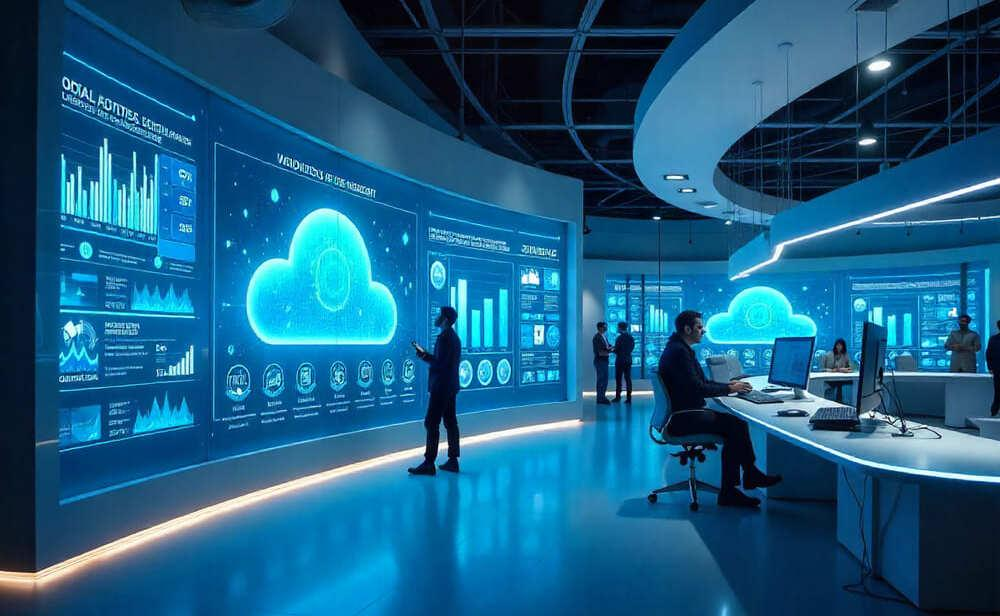
Imagine arriving at your office on a Monday morning only to discover that your company’s website has been unavailable for hours. Customers have been unable to place orders, employees cannot access internal systems, and social media is filling up with complaints. The first question everyone asks is, “When did this start?” Closely followed by, “What caused it?”
Without a monitoring system in place, those questions can be surprisingly difficult to answer. Many businesses only discover a problem after it has already affected customers, resulting in lost revenue, damaged trust, and costly downtime.
Cloud monitoring changes that. It gives businesses continuous visibility into the health and performance of their applications and infrastructure, allowing issues to be detected and resolved before they become major incidents. Whether you’re running an e-commerce store, a fintech platform, or a company website, monitoring is one of the most valuable investments you can make in your cloud environment.
Seeing Beyond “Is My Website Online?”
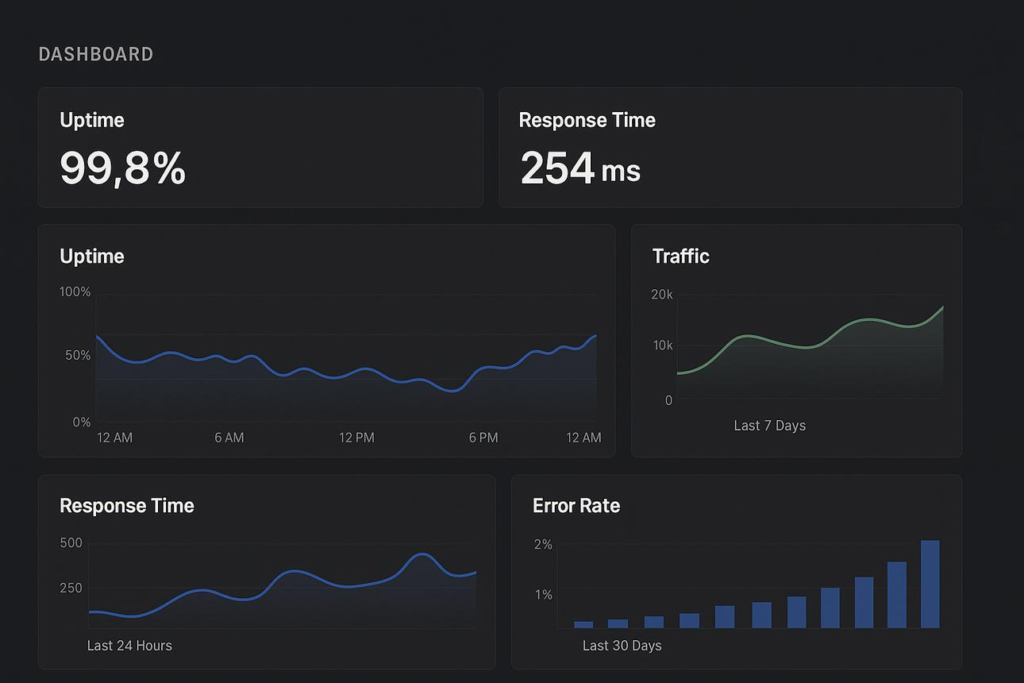
Many people think monitoring simply means checking whether a website is online. While availability is important, effective cloud monitoring goes much deeper.
Imagine your application is still accessible, but every page now takes ten seconds to load instead of one. From a monitoring perspective, the application hasn’t failed—but from your customers’ perspective, it already has.
Modern monitoring helps organizations understand not only if their systems are running, but how well they’re running. It continuously tracks performance, resource usage, user activity, and operational health so that potential problems can be identified before they escalate.
This proactive approach allows IT teams to respond to warning signs rather than emergencies.
The Difference Between Monitoring and Observability
Monitoring tells you that something is wrong. Observability helps you understand why it’s wrong.
Think of your car’s dashboard. A warning light might tell you the engine has a problem, but it doesn’t necessarily explain the cause. A mechanic uses additional information to diagnose the issue. Cloud observability works in much the same way.
Three types of data work together to provide this deeper understanding:
- Metrics reveal how your systems are performing over time, such as CPU usage, memory consumption, or network traffic.
- Logs provide detailed records of events occurring within your applications and infrastructure.
- Traces follow individual requests as they travel through different services, making them invaluable for troubleshooting distributed applications.
When combined, these three sources give engineers the complete picture needed to investigate and resolve problems quickly.
The Heart of AWS Monitoring
Amazon CloudWatch sits at the centre of monitoring within AWS. Rather than acting as just another dashboard, CloudWatch becomes the central nervous system of your cloud environment.
It continuously collects metrics from services such as virtual machines, databases, serverless functions, and storage systems. If CPU usage suddenly spikes, storage begins filling up, or response times increase, CloudWatch notices immediately.
More importantly, it doesn’t simply display information—it can act on it. You can configure alarms that notify your operations team, trigger automated responses, or even scale your infrastructure automatically when demand increases.
For many organisations, CloudWatch becomes the first place engineers look whenever something doesn’t seem right.
Understanding What Changed
Imagine your application suddenly begins failing after working all morning perfectly.
One possibility is that someone unintentionally modified a security policy, deleted a resource, or changed a configuration.
This is where AWS CloudTrail becomes invaluable.
CloudTrail records actions performed within your AWS environment, creating a detailed history of who did what, when, and which resources were affected. Instead of guessing what changed, teams can investigate with confidence using a reliable audit trail.
For organisations concerned about governance, compliance, and security, this visibility is essential.
Following Every Request
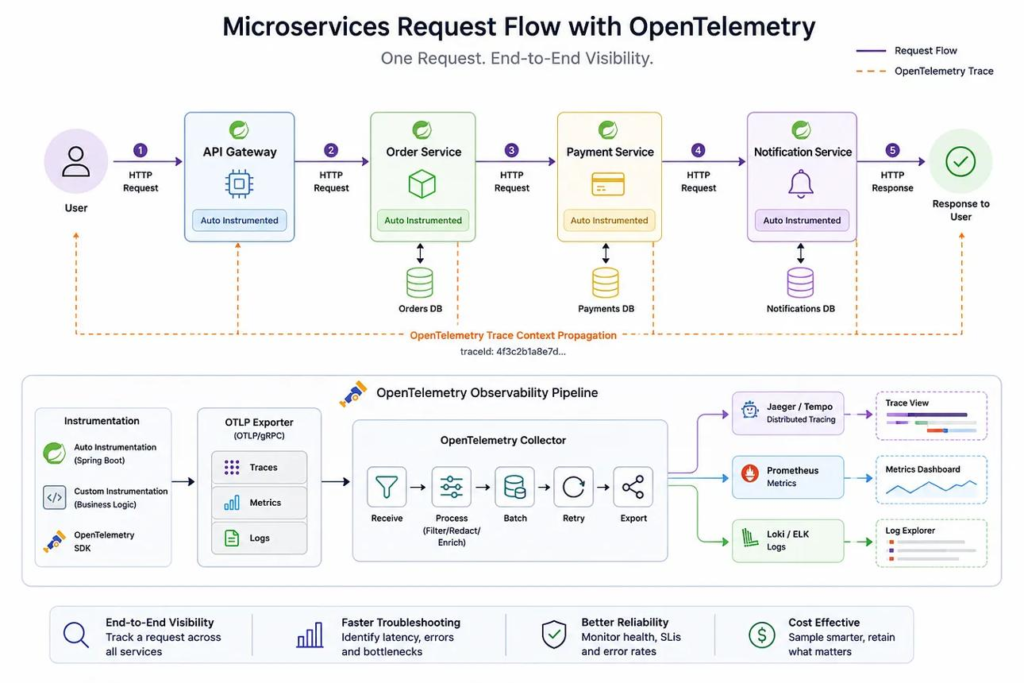
Modern applications rarely consist of a single server. Instead, they often include APIs, databases, authentication services, payment gateways, and microservices working together behind the scenes.
When a customer clicks a button and something goes wrong, identifying the exact source of the problem can be challenging.
AWS X-Ray helps by tracing each request as it moves through your application. Rather than simply telling you that an error occurred, it reveals precisely where the delay or failure happened.
For developers building distributed systems, this dramatically reduces troubleshooting time.
Monitoring Isn’t Just About Performance
A healthy application isn’t necessarily a secure application.
Sometimes the biggest threat isn’t a slow server—it’s suspicious activity happening quietly in the background.
That’s why AWS provides services such as Amazon GuardDuty, which continuously analyses your AWS environment for unusual behaviour, including compromised credentials, unauthorised API calls, and potential malware activity.
By combining operational monitoring with intelligent threat detection, businesses gain a much more complete understanding of their cloud environment’s health.
Bringing Everything Together
Monitoring becomes truly powerful when these services work together.
CloudWatch detects a sudden spike in CPU usage. CloudTrail confirms that a configuration change was made just minutes earlier. X-Ray identifies the exact service responsible for increased response times, while GuardDuty verifies that the issue isn’t the result of malicious activity.
Instead of spending hours searching for the root cause, engineers can move directly toward resolution.
This coordinated visibility enables organisations to reduce downtime, improve customer experience, and make better operational decisions.
Why It Matters for SMEs
Cloud monitoring isn’t reserved for large enterprises with dedicated operations teams.
For small and medium-sized businesses, even a brief service interruption can mean lost sales, missed opportunities, and frustrated customers.
With the right monitoring strategy, SMEs gain the same visibility and operational confidence enjoyed by much larger organisations. They can detect issues earlier, respond faster, and maintain reliable digital services without maintaining a large IT department.
How Arthruite Integrated Can Help
At Arthruite Integrated, we help businesses move beyond simply deploying applications in the cloud. We help them understand how those applications are performing every minute of every day.
From implementing monitoring dashboards and configuring intelligent alerts to analysing logs, strengthening security, and optimising performance, we work alongside businesses to ensure their cloud environments remain reliable, secure, and ready to scale.
Cloud monitoring isn’t just about collecting data—it’s about transforming that data into actionable insights that keep your business running smoothly.
Additional references
If you’d like to encourage readers to continue learning, you can end the article with a Further Reading section: